Lash tips for healthier-looking lashes without irritating your eyes
a[data-rs-seo-link]{text-decoration:underline!important;color:#1a56db!important;cursor:pointer!important;}a[data-rs-seo-link]{text-decoration:underline!important;color:#1a56db!important;cursor:pointer!important;}
Lash tips should do more than make lashes look longer. A good routine protects the eyelid, the natural lash line, and the surface of the eye while still giving the lashes definition. For most people, that means keeping mascara clean, curling before mascara, removing eye makeup gently, treating strip lashes and extensions as products used close to a sensitive area, and being cautious with growth serums. The U.S. Food and Drug Administration describes false eyelashes, lash extensions, and their adhesives as cosmetic products. Eye-health organizations also warn that irritation, allergy, infection, and lash breakage can occur when products are used incorrectly. The aim is not to avoid every lash product, but to choose and use them with fewer preventable problems.
Why lash care needs a different safety standard
Eyelashes sit at a busy edge of the face. They frame the eyes, but they also help keep debris away from the ocular surface. The eyelid margin contains small oil glands, and heavy makeup, poorly placed liner, old mascara, adhesive residue, or aggressive cleansing can irritate that area. For that reason, lash routines need a stricter hygiene standard than many other makeup steps.
The eye area is also less forgiving than the cheek or forehead. If a face product stings, you can usually rinse it off and reassess. If lash glue, mascara, glitter, remover, or serum moves into the eye, the result may be redness, tearing, swelling, blurred vision, discomfort, or a break from makeup until the irritation settles. Public guidance from the FDA and the American Academy of Ophthalmology points to the same practical rule: products used around the eyes should be clean, suitable for that area, and stopped if they cause irritation.
For more practical beauty routines, see our Usage Tips section.
Start with a low-irritation everyday lash routine
An everyday routine should define lashes without leaving them stiff, sticky, or difficult to clean. The simplest approach is usually the most reliable: curl clean lashes, apply mascara from the mid-lengths outward rather than scraping the waterline, separate clumps while the product is still soft, and remove everything before sleep.
Keep mascara clean and replace it when it changes
Mascara wands touch lashes and then go back into a moist tube, which is why eye-area cosmetics require extra caution. The FDA notes that mascara applicators can be exposed to bacteria and fungi during normal use, and that eye cosmetics generally have shorter useful lives than many other beauty products. A practical rule is to discard mascara sooner if it changes smell, texture, or performance; if you have had an eye infection; or if the wand has touched an unclean surface.
Do not add water, saliva, toner, setting spray, or oil to revive dried mascara. Diluting the formula may affect the preservative system and can introduce microbes. It is also better not to share mascara, lash glue, lash curlers, or eye pencils. Sharing may seem minor, but it can transfer microorganisms between users.
Apply eye makeup outside the lash line
For comfort, place mascara and liner where they enhance the lashes without blocking the eyelid margin. Tightlining can look polished, but heavy product on the inner rim may be more likely to transfer into the tear film or collect near the oil glands. If your eyes water easily, keep liner thinner, avoid crumbly formulas, and consider tubing or washable mascara instead of products that need hard rubbing to remove.
Use curlers and heated tools with restraint
A lash curler can open the eye shape quickly, but it can also crimp, pull, or snap lashes if used carelessly. Curl before mascara, not after. Wet mascara makes lashes tacky, and dry mascara makes them more rigid; both situations can increase the chance of breakage when pressure is applied.
Check the curler pad regularly. A worn or split pad can create a sharp edge that pinches lashes unevenly. Use light pressure in short pulses rather than one hard clamp. If lashes stick to the curler, stop, clean the tool, and let any skincare or makeup residue dry before trying again.
Heated curlers need even more care because eyelid skin is thin and sensitive. Choose the lowest effective setting, test the temperature away from the eye area first, and avoid heated tools when the skin is irritated, sunburned, swollen, or recovering from a reaction. Heat should soften the shape of the lash, not feel hot against the lid.
Choose strip lashes and lash glue with realistic expectations
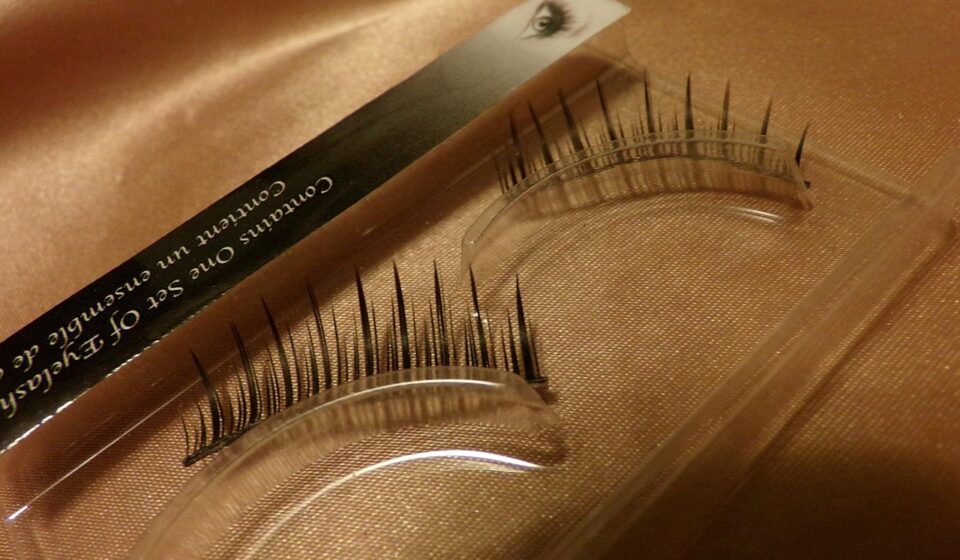
Strip lashes can be a good occasional option because they are removable and do not require semi-permanent bonding to individual natural lashes. They are still not risk-free. The adhesive sits close to the eyelid, and both the glue and the removal process can cause problems if they are rushed.
Before applying strip lashes, check that the band fits your eye. A band that is too long can lift at the corners, poke the skin, or encourage extra glue. Trim from the outer edge in small increments and let the adhesive become tacky before placement. Wet glue is more likely to slide toward the eye or require repeated repositioning.
Removal matters as much as application. Do not pull a strip lash off dry. Soften the adhesive with a suitable eye-makeup remover, hold the skin gently, and peel slowly from the outer corner. After removal, clean adhesive residue from the lash band if you plan to reuse it, and discard lashes that look dirty, misshapen, or difficult to sanitize.
Know the trade-offs before getting lash extensions
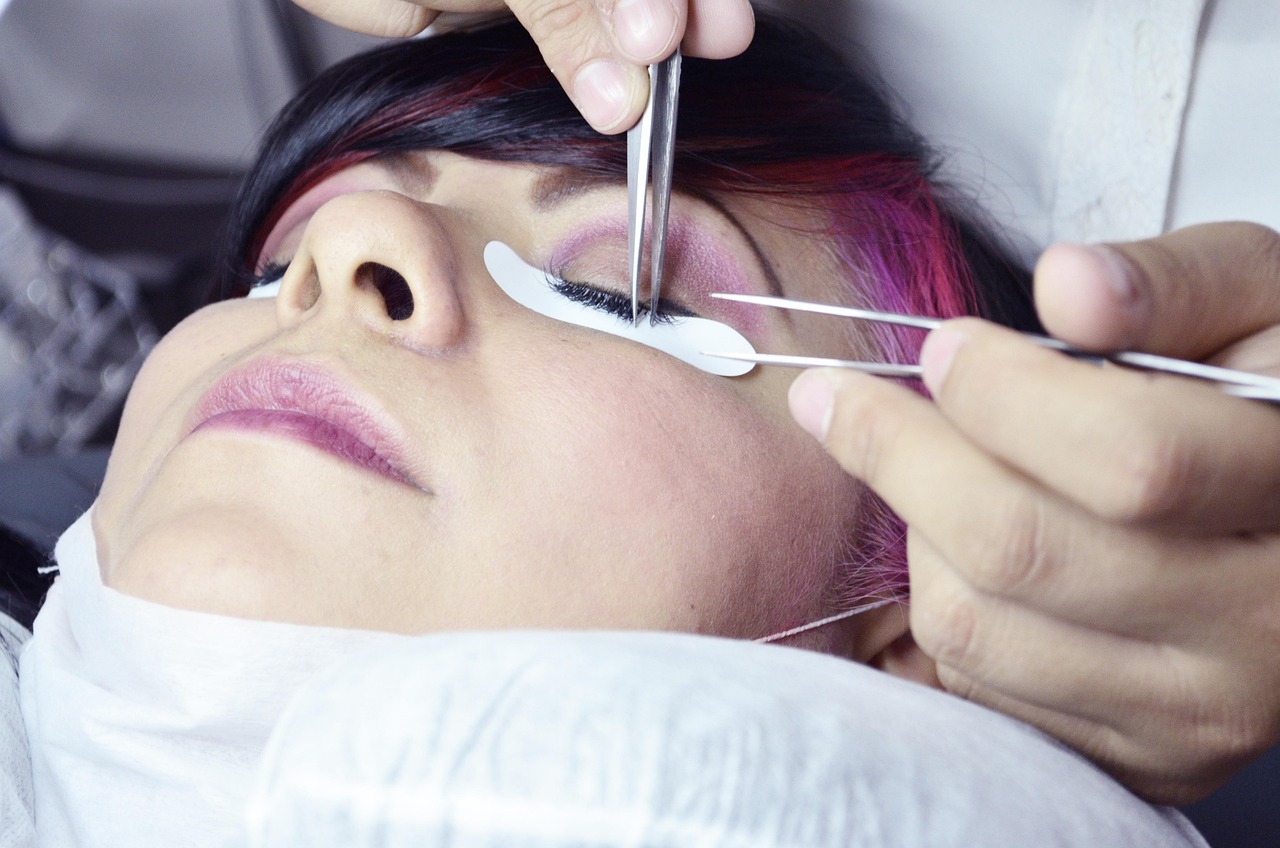
Lash extensions can reduce daily mascara use and create a polished look, but they involve adhesive, tools, and repeated maintenance near the eye. The American Academy of Ophthalmology has identified several possible complications associated with extensions, including eyelid or corneal trauma, infection, allergic reaction to glue, and temporary or permanent lash loss. EyeWiki, an ophthalmology reference associated with the same professional community, also describes reported conditions such as allergic blepharitis, conjunctival irritation, and traction alopecia.
This does not mean every set of extensions causes harm. It means the service should be treated as a procedure that requires hygiene, training, careful placement, and honest screening. A salon should be clean, tools should be sanitary, and the technician should be able to discuss adhesive ingredients, patch testing policies, aftercare, and what to do if discomfort develops.
Questions to ask before an appointment
- What training and lash-extension experience does the technician have?
- How are tweezers, surfaces, and reusable tools cleaned between clients?
- Can you review the adhesive ingredient list before application?
- Is a patch test available, and what are its limits?
- What symptoms mean the extensions should be removed or assessed by a professional?
A patch test can reduce uncertainty, but it is not a guarantee. Eyelid skin and the ocular surface may react differently from skin elsewhere on the body. If you already have an eye infection, inflamed eyelid skin, unexplained swelling, active blepharitis symptoms, or a history of strong reactions to adhesives, postponing the service is the safer choice. See also: Beauty Ingredients.
Aftercare should focus on cleanliness, not just retention
Some aftercare advice focuses only on making extensions last longer. Retention is useful, but hygiene is more important. Lashes can trap oil, skin flakes, dust, and makeup. Clean them as instructed with a product suitable for extensions, avoid rubbing, and do not use heavy oils near adhesive bonds unless your technician confirms they are compatible.
Do not pick, twist, or pull extensions. If the set feels painful, poky, too heavy, or uneven, contact the salon for professional assessment instead of trying to remove clusters yourself. Pulling can remove natural lashes and irritate the follicles.
Be careful with lash serums and growth claims
Lash serums vary widely. Some are mainly conditioning products with humectants, peptides, panthenol, or plant extracts. Others use prostaglandin analogues or related ingredients that are associated with stronger growth effects but also more important safety considerations.
The American Academy of Ophthalmology distinguishes prescription bimatoprost, used in an FDA-approved eyelash growth medicine, from many over-the-counter serums that may contain other prostaglandin-like ingredients not approved for eyelash growth by the FDA. Reported concerns around prostaglandin analogues include eye redness, irritation, eyelid-skin darkening, iris color changes in some contexts, and cosmetic changes around the eye area. Not every user experiences these effects, but the possibility is important enough that lash serum should be chosen carefully, especially by people with dry eye, glaucoma treatment, contact lens use, or a history of ocular inflammation.
Use serum only as directed and keep it on the upper lash line if the product instructions specify that area. More product does not mean faster results. Applying too much increases the chance of migration onto nearby skin or into the eye. Stop using any serum that causes persistent redness, swelling, pain, vision changes, or a new rash, and seek professional advice when symptoms do not resolve quickly.
A practical comparison of common lash options
| Lash option | Main benefit | Main caution | Best use case |
|---|---|---|---|
| Washable mascara | Quick definition and easy removal | Old or shared tubes can raise hygiene concerns | Everyday wear when removed nightly |
| Waterproof mascara | Longer wear against tears, sweat, or humidity | Removal can require more rubbing | Occasional events rather than daily use |
| Strip lashes | Temporary length and volume | Glue can irritate, and dry removal can pull lashes | Special occasions with careful removal |
| Lash extensions | Longer-lasting fullness without daily mascara | Adhesive reactions, hygiene issues, and traction are possible | Professional application for suitable candidates |
| Lash serum | May condition lashes or support growth depending on formula | Growth-active ingredients may carry eye-area side effects | Consistent use after ingredient review |
When to pause lash products and seek help
The most useful lash tips include knowing when not to continue. Stop using eye cosmetics if the eye area becomes inflamed or infected. Avoid covering symptoms with more makeup, because mascara, liner, glue, and remover can make irritation harder to interpret.
Pause lash products and consider professional advice if you notice persistent redness, pain, swelling, discharge, crusting, light sensitivity, blurred vision, a foreign-body feeling, or sudden lash shedding. The NHS advises avoiding eye makeup, especially eyeliner and mascara, during blepharitis symptoms. That advice is consistent with a broader safety principle: if the eyelid margin is already inflamed, adding cosmetic products can prolong discomfort.
If you suspect an allergic reaction to lash extensions, do not try to dissolve or pull off the set aggressively at home. Adhesive removal near the eye should be handled carefully, and significant pain, swelling, or vision symptoms deserve medical attention.
Frequently asked questions
Are lash extensions bad for natural lashes?
They are not automatically bad, but they can damage natural lashes if they are too heavy, poorly isolated, pulled during removal, or applied repeatedly without attention to lash health. Extensions also carry adhesive and hygiene risks because they sit close to the eyelid.
Can I wear mascara with lash extensions?
Many technicians advise avoiding regular mascara on extensions because it can clump, weaken the bond, and make cleaning harder. If mascara is allowed, use only a formula labeled as extension-safe and avoid waterproof mascara unless your technician specifically approves it.
How can I make lashes look fuller without extensions?
Curl clean lashes, use a defining mascara, apply thin liner close to but not inside the lash line, and remove products gently at night. For occasional volume, strip lashes may be easier to control than semi-permanent extensions, provided the glue and removal process suit your eyes.
Should I stop using lash serum if my eyelids darken or itch?
Yes. New itching, redness, swelling, or darkening around the eyelid is a reason to pause the product and review the ingredient list. If symptoms persist, involve an eye-care or medical professional rather than continuing through discomfort.
What is the most important lash hygiene habit?
Remove eye makeup fully and gently before sleep. Clean lashes reduce buildup at the lid margin, while gentle removal helps protect the natural lash shaft and follicle from unnecessary pulling.
The bottom line
The best lash routine is one you can repeat without irritation. Use fresh eye products, keep tools clean, avoid sharing mascara, curl before applying product, remove glue gently, and treat extensions and growth serums as higher-commitment choices rather than casual add-ons. Longer-looking lashes are appealing, but comfort, hygiene, and natural lash health should decide how far your routine goes.